
4
Better prompt caching for GPT-6
Learn how GPT-6 improves prompt caching with higher cache hit rates, new diagnostics, explicit breakpoints, and controls that reduce latency and costs.
Ranked by how many independent sources converged on each story.
30 stories from 15 sources. 4 reached us from more than one source.
Anthropic says its new Claude Opus 5.5 model comes with stronger safeguards in the wake of recent rogue AI hacking incidents. In an announcement on Tuesday , Anthropic says Opus 5.5 comes with improvements to certain risky behaviors, including attempts to escape the company's testing sandbox. It's the first model released by Anthropic after CEO Dario Amodei announced plans to "pace the frontier,"…
Meet GPT-6 Sol and Luna, two models that bring frontier intelligence to everyday work with different balances of capability and cost.
Last week TypeSafe AI unveiled Jev , their first example of a new category of model that they are calling "System One models" (I'm with Maggie Appleton, I think "decision models" is a better name for these). Jev is an interesting variant on the usual LLM format: it still accepts text inputs, but instead of text output it returns floating point numbers corresponding to categories, yes/no…
Learn how GPT-6 improves prompt caching with higher cache hit rates, new diagnostics, explicit breakpoints, and controls that reduce latency and costs.
My comment on MCP was always a bad idea? — Hacker News. This article entirely misses the value that MCP brings today. Sure, there's almost no reason to use MCPs if you are running a full-blown terminal agent (Claude Code, Codex, Meta Muse, OpenClaw etc) with unfettered internet access - just let it call APIs directly. If you want to operate something that's less YOLO than that, you'll find…
Hey, you know it's like super obvious if you're using AI to write your scripts for TikTok and YouTube, right? [...] It's not just the general AI-isms of "it's not X, it's Y", or the rule of three, or the really weird broken staccato-like way of writing where you just say a lot of things with all these punctuation marks. and it sounds really deep, but it's not. It's the lack of anything . It's the…
Release: llm-typesafe 0.1a0 I built this new plugin for LLM to add support for TypeSafe AI's new Jev model . Install it like this: llm install llm-typesafe Then set an API key ( get one here , the waitlist seems to move pretty fast): llm keys set typesafe # Paste key And now you can ask yes/no "noul" questions like this: llm -m jev 'Please refund my last payment.' \ -s 'Does this message…
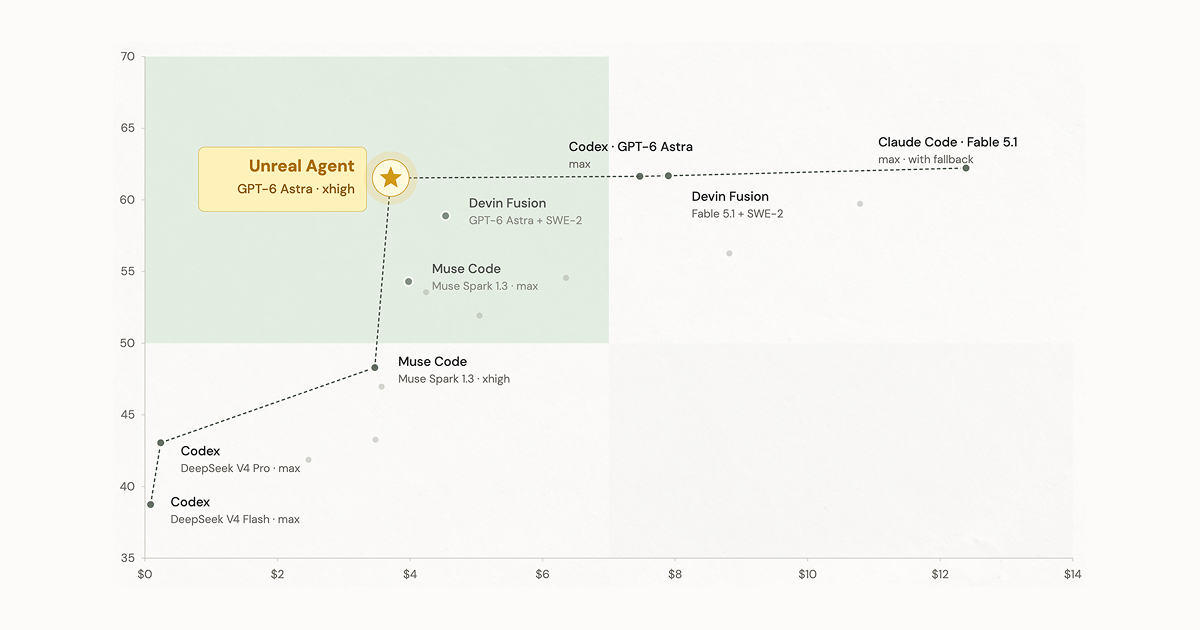
https://github.com/unreallabsai/unreal-agent
We’re open-sourcing Rebalancer, the assignment-problem solver that has been used to solve resource allocation problems throughout Meta for over nine years. Rebalancer separates several related concerns: how to specify an assignment problem, how to store it efficiently in memory, how to solve it, and how to debug it. This separation of concerns is crucial to [...] Read More... The post…
Vary support is now available in Cache Rules on every plan. You can normalize known negotiation headers, pass exact values through to the origin when those small differences matter, or bypass cache when the variation is too unpredictable.
GPT-6 Sol and GPT-6 Luna are now generally available on Amazon Bedrock, giving you more options to match intelligence and efficiency to each workload.
Skills let you encode domain-specific procedures as reusable, portable instructions for agents, but a fluent answer doesn't prove the agent picked the right skill or followed it. Learn how to measure skill selection and instruction following with Strands Evals and Amazon Bedrock AgentCore Evaluations.
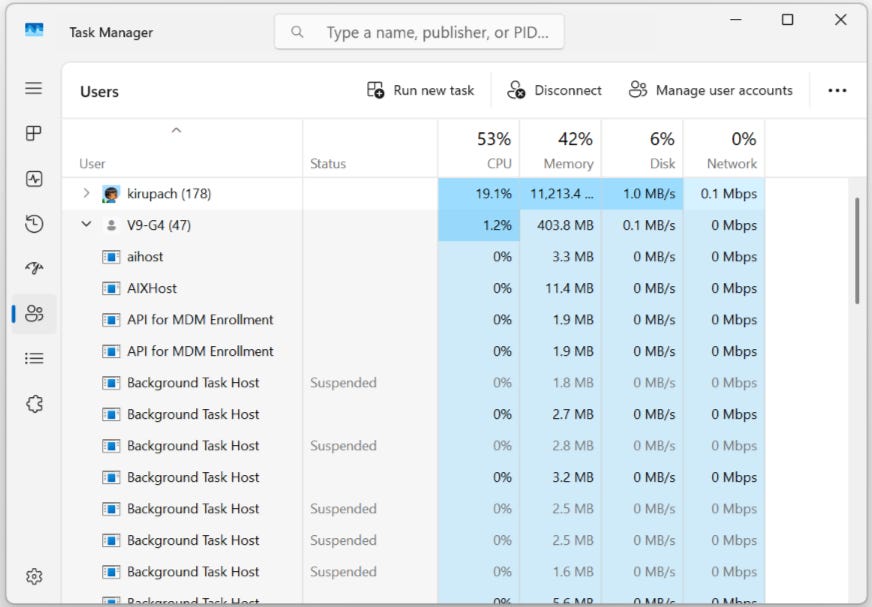
Deepdive into the Windows team’s efforts to make the OS “AI agent-friendly” and win back developers by going all-in on Linux on Windows, local models, GPUs, & more
Worker Previews gives every branch its own URL, configuration, state, and observability, so you and your agents can test changes in parallel without affecting production.
Reactiv used Amazon Bedrock AgentCore to build a multi-agent AI Scheduler that autonomously refreshes Shopify merchants' mobile apps on a schedule, reducing merchant configuration time by 80% and getting to production 33% faster.
Concurrency sweeps help you right-size a generative AI endpoint on Amazon SageMaker AI by systematically benchmarking it at increasing load levels. This post walks through deploying a model, running automated concurrency sweeps with the CreateAIBenchmarkJob API, and using the results to make data-driven capacity decisions about fleet size.
In about four weeks, Trane Technologies built an AI-powered agentic solution on Amazon Bedrock AgentCore that reduced a 20-minute, multi-screen building diagnostic workflow to a 20-second natural language interaction, a 60x improvement in time-to-insight. This post shares the architectural approach and key design decisions behind the solution.
Learn how Tata Elxsi built IRIS, a real-time industrial safety platform on AWS. IRIS filters camera video at the edge, streams metadata through Amazon Kinesis, runs computer vision on Amazon SageMaker AI, and correlates detections into high-confidence alerts, detecting unsafe conditions in seconds instead of minutes.
OpenAI outlines priorities and principles for rigorous, secure, and independent third-party AI safety assessments of frontier models and safeguards.
This was the month the world took notice that AI might kill everyone.
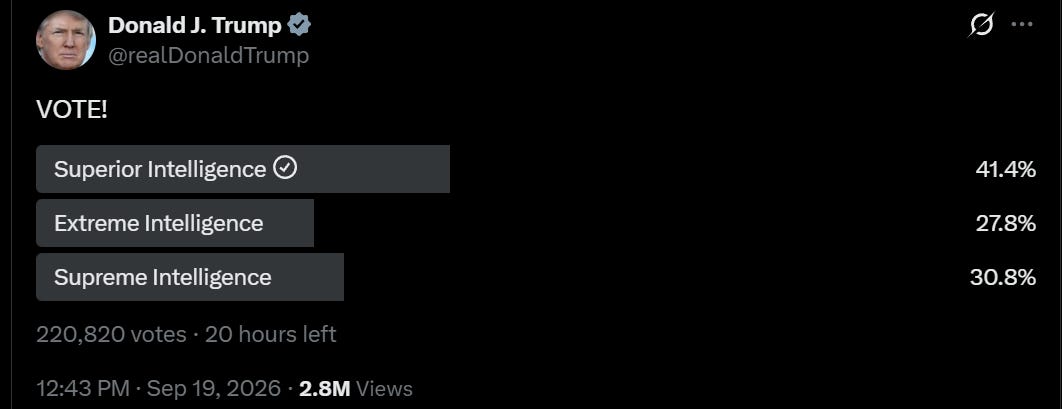
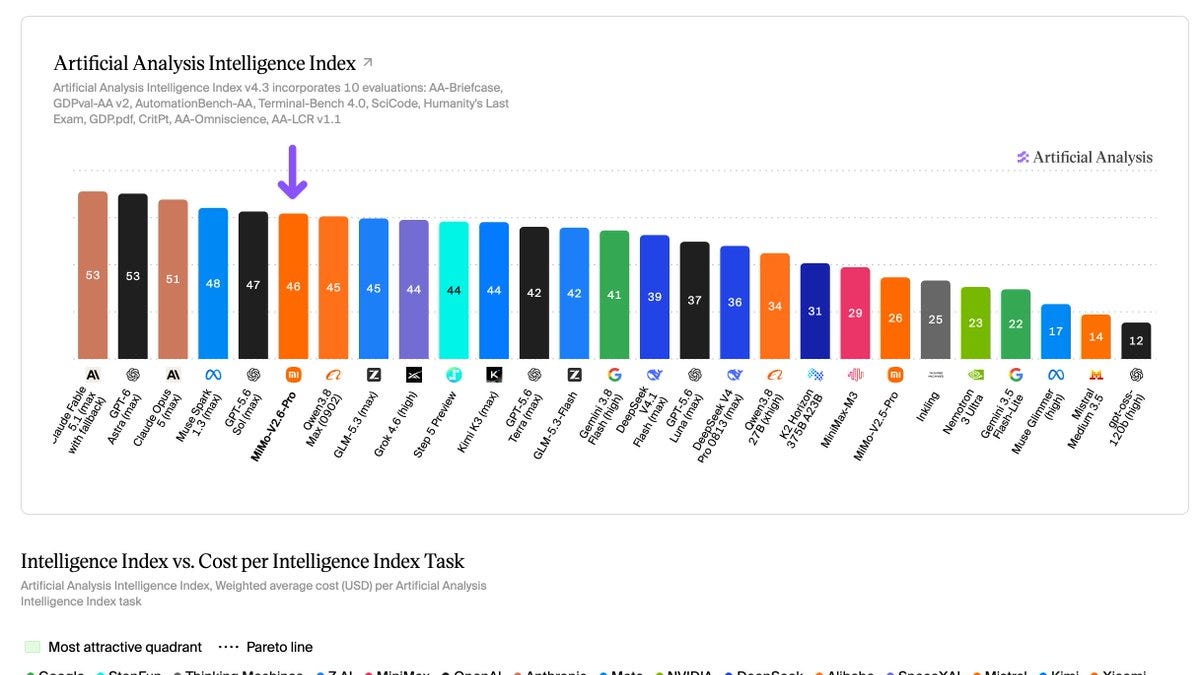
crowning a new Chinese frontier lab
After a two year preview, Cloudflare's support for running Python code in their server-side Workers platform is now stable: "Python is now a first-class, fully supported language on the Cloudflare Developer Platform". A neat thing about this is how it works. Cloudflare are running Python compiled to WebAssembly via Pyodide in their V8-based…
Meta says Muse was built from scratch, but acknowledges the AI assistant was "heavily inspired" by OpenClaw — down to some of its workspace filenames and content.
OpenAI is launching two new models, which it says are cut from the same cloth as Astra.
Sep 22, 2026 8 min read
Stories are ranked by a fixed formula — how many independent sources linked to them, how fast, and how recently — never by an algorithm that changes between editions.